
We’re working towards creating a future worth living for, and that extends to the preservation of our land and waterways we call home.
Blue Tree Project is committed to protecting the environment while creating symbols of hope through our tree-painting initiative. Our environmental guidelines ensure that each painted tree aligns with sustainability practices, safeguarding local ecosystems and minimising any potential impact. By following these guidelines, we aim to inspire meaningful conversations about mental health while respecting and preserving the natural world.
Who is this framework for?
These guidelines apply to our mental health charity, its volunteers, partners, and any individuals involved in Blue Tree Project painting initiatives.
We all play a role in helping create a healthy future!
Guidelines for Painting Dead Trees Blue
- Only dead trees shall be selected for the Blue Tree Project. Living trees or trees of ecological importance should not be painted.
- The selection of dead trees should be done in consultation with qualified arborists or environmental experts to ensure that the tree is truly deceased and poses no ecological risk.
- Only environmentally friendly paints specifically formulated for outdoor use shall be used for painting dead trees blue. These paints should comply with local regulations.
- The paints should be water-based, non-toxic, and designed to minimise any potential harm to the surrounding environment.
- Prior to painting, precautions shall be taken to protect the surrounding vegetation and minimise disturbance to the natural ecosystem.
- Care should be taken to avoid paint runoff onto the ground or nearby plants. Protective barriers, such as tarps or plastic sheets, should be used to prevent accidental spills or overspray.
- The painting shall avoid environmentally sensitive areas, such as protected lands, conservation areas, and habitats of endangered species.
- Local regulations and permits, where applicable, must be obtained before initiating any painting activities.
- The participants shall survey the prospective tree for any significant habitat elements such as hollows. These should be thoroughly checked for any evidence of nesting wildlife. If uninhabited, we recommend not to paint within 30cm of any hollows/potential nesting areas for possible future use.
- Painted dead trees shall be regularly monitored by those who have undertaken the painting activity. This is to ensure the paint remains intact, bark removal occurs and does not pose a risk to the environment.
- If the painted tree starts showing signs of decay or poses an ecological risk, it shall be removed by qualified professionals.
- The removal process shall adhere to local guidelines to minimise disturbance to the surrounding environment.
This policy shall be periodically reviewed to incorporate advancements in environmental knowledge, best practices, and changes in local regulations to ensure its continued effectiveness.
Testimonial
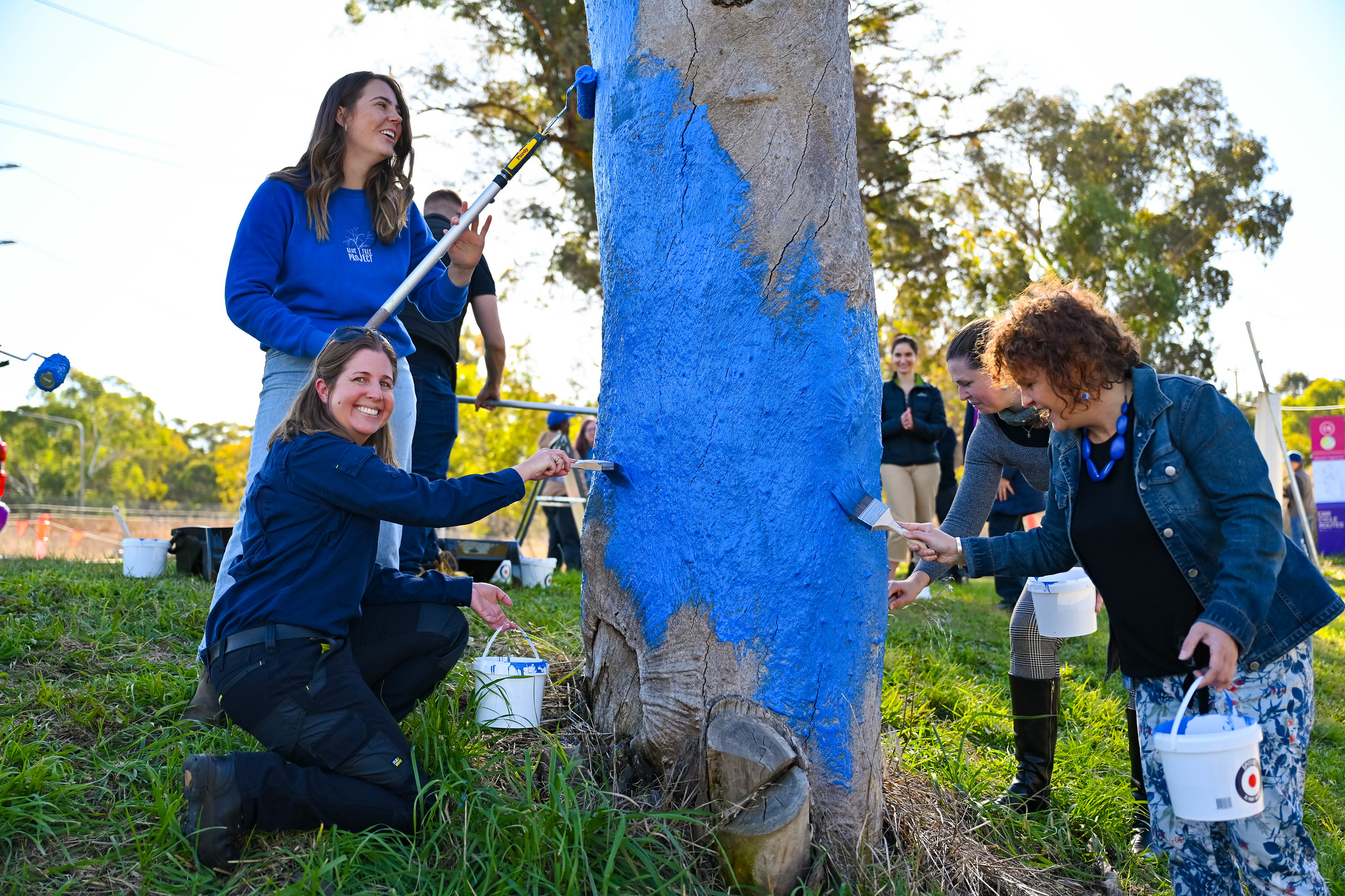
I was so lucky and excited to initiate the painting of a tree as part of the Blue Tree Project in 2023. Once we had found a suitable dead tree (with no bark and in a prominent location) we consulted an ecologist who assessed the tree to provide recommendations to ensure the painting did not adversely affect the local wildlife. She looked for any significant habitat elements including hollows and surveyed what birds were using the tree and how (were they nesting or simply perching in the branches). Following her assessment (which indicated there was potential habitat elements for microbats) she noted that the potential impact on wildlife would be very low, particularly as the paint being used was non-toxic. She recommended that we didn’t paint within 30cm of hollows (as a precaution) and that we do a thorough check of the tree prior to painting. Although it was highly unlikely that we would encounter wildlife while painting the tree it was recommended that we take care to minimise disturbance and avoid painting that part of the tree.
The painting of the Blue Tree was such a wonderful experience for all involved with new friendships and connections formed as a result of the event. It has definitely sparked many conversations and the beautiful local birds are still perching on the outstretched, now blue, branches.
Samantha Ning
Director Tree Protection, Urban Treescapes for ACT Government
What paint is being used?
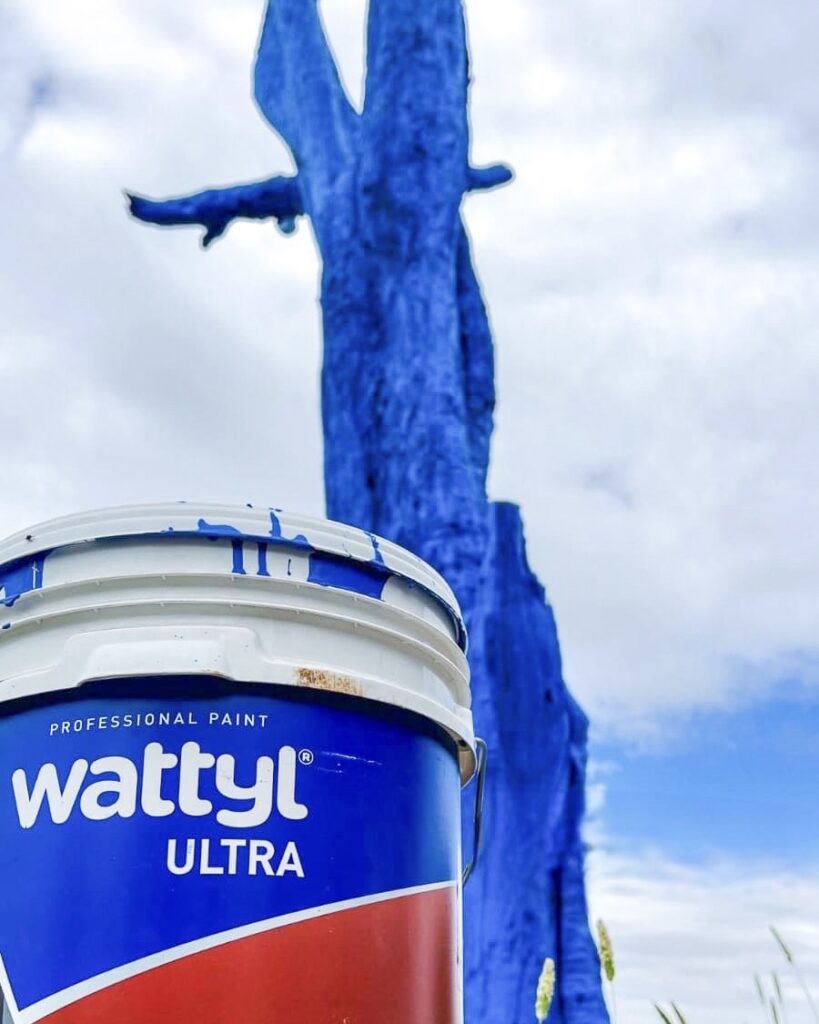
Wattyl is our ‘Official Paint Partner’ as their products meet and exceed Australian and global eco certifications and standards. We also say no to landfill and are a proud supporter of ‘Paintback’, a world-first national disposal and recycling scheme.
To find out more information around the products used please visit their Environmental Credentials page here.
What else are we doing to help protect the environment?
At Blue Tree Project, we’re committed to treading lightly and doing our bit for the environment. We’re mindful of who we work with, use compostable HeapsGood packaging, and choose road travel over flights where we can.
While painting dead trees blue might raise questions, we do so with care, never on living trees, and only to start important conversations around mental health. Soon, we’ll be launching a native tree planting initiative - one tree planted for every 100 Blue Tree Projects registered - and we’ll be out there doing it ourselves.
We know the planet is under pressure, and we’re working to protect the land we call home - because a mentally healthy future needs a healthy planet to grow on.
